
Spotlight on: India
July's Coffee of the Month Takes Us to India
A land of extraordinary cultural diversity and rich agricultural traditions, India has a coffee story unlike any other. From legendary smuggled seeds and colonial plantations to biodiverse shade-grown farms and a thriving specialty coffee scene, India's coffee heritage spans more than four centuries.
The Seven Seeds
Coffee's journey began in Africa before spreading across the Arabian Peninsula, where Yemen became a major centre of cultivation and trade. As Arab merchants travelled to India in search of valuable spices, they introduced roasted coffee to the subcontinent. The drink quickly gained popularity among India's elite, creating demand that soon outstripped supply.
One of the earliest written references to coffee in India comes from Reverend Edward Terry, chaplain to Sir Thomas Roe, the English ambassador at the court of Emperor Jahangir in 1616. He described a beverage called "coffee", made from a black seed boiled in water and valued for its digestive and restorative qualities.
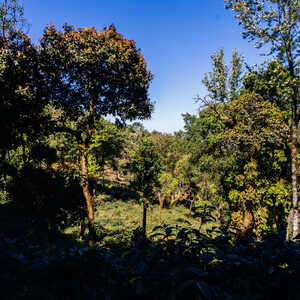
With demand established, local cultivation soon followed. According to legend, the Sufi saint Baba Budan smuggled seven coffee seeds from Yemen during a pilgrimage in the 17th century, concealing them in his beard. He planted them in the hills of Chikmagalur in the Western Ghats, laying the foundations for India's coffee industry. Today, the region is known as the Baba Budangiri Hills, where a shrine commemorates his legacy..
Birth of the Plantations
Coffee's expansion accelerated during the colonial era. In the mid-17th century, Dutch traders transported coffee plants from Yemen to their colonies in Ceylon (Sri Lanka) and southern India. Although the Dutch were among the first Europeans involved in India's coffee trade, they later shifted their focus to Java.
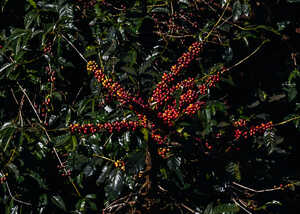
The British East India Company played a much larger role in developing India's coffee industry. During the 18th and 19th centuries, British planters established large-scale coffee estates across Karnataka, Wayanad, and the Nilgiri Hills, helping transform coffee into a significant commercial crop.
It was during this period that one of India's most distinctive coffees emerged. Coffee shipped from India's west coast to Europe spent months at sea, exposed to humid monsoon winds. The beans absorbed moisture, swelling in size and developing a unique mellow character. This accidental transformation became known as Monsoon Malabar coffee.
Although modern shipping eliminated the lengthy sea voyage, demand for the flavour profile remained. Today, the monsooning process is recreated in open-sided warehouses along India's west coast, where coffee is exposed to monsoon conditions for several months before export.
Modern Coffee Cultivation
Coffee leaf rust, which spread through Asia during the 19th century, had a profound impact on Indian coffee production. As Arabica plantations suffered significant losses, many growers turned to Robusta, which proved more resistant to disease and better suited to India's humid conditions.
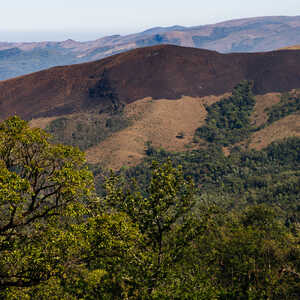
Today, Robusta accounts for the majority of India's coffee production, although both Arabica and Robusta are cultivated. More than 70% of the country's coffee is exported, with production concentrated in Karnataka, Kerala, Tamil Nadu, and Andhra Pradesh. Smaller volumes are also grown in the northeastern "Seven Sister States", where coffee cultivation continues to expand.
Shade-Grown and Sustainable
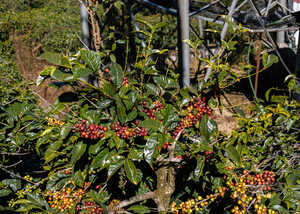
One of the defining characteristics of Indian coffee is its shade-grown cultivation system. Most coffee is grown beneath a canopy of evergreen and leguminous trees, creating biodiverse agroforestry systems that benefit both coffee quality and the environment.
The slower ripening that occurs under shade allows sugars to develop more fully, often resulting in more complex flavour profiles. Many farms also cultivate spices and fruit crops alongside coffee, including cardamom, pepper, nutmeg, cloves, oranges, and tangerines. This diversification provides additional income while enhancing biodiversity.
Coffee is typically hand-picked, often through multiple rounds of selective harvesting to ensure only ripe cherries are collected. After processing, beans are commonly dried on patios or raised beds before export.
The environmental benefits of shade-grown coffee are significant. Tree cover helps conserve soil moisture, reduce erosion, improve soil fertility, and provide habitat for wildlife. It also lowers the need for chemical inputs and supports natural pest control.
Nowhere is this more important than in the Western Ghats, one of the world's 36 recognised biodiversity hotspots. Stretching over 1,500 kilometres, the region is home to thousands of plant and animal species, many found nowhere else on Earth. Several threatened bird species, including the Nilgiri Flycatcher, rely on shaded coffee landscapes as critical habitat.

Looking Ahead
India's coffee sector continues to evolve. While challenges such as climate change, labour shortages, infrastructure constraints, and market education remain, the country's specialty coffee industry is gaining momentum. Producers are investing in quality, traceability, and innovative processing methods, helping Indian coffees earn greater recognition on the global stage.
At Braziers, we've long enjoyed showcasing coffees from India, with favourites including Gems of Araku and Monsoon Malabar. As the country's coffee story continues to develop, India remains one of the most fascinating and dynamic origins in the coffee world.
Posted on July 1st 2026
 Updating page...